Virtual Staging for Commercial Properties: Opportunities in Europe's AI-Driven Economy
Cover AI applications in office and retail spaces, with insights from EU trends like 75% AI adoption in real estate operations.

Virtual Staging Commercial Properties Europe
In the rapidly shifting landscape of modern real estate, presenting properties effectively has transitioned from a physical layout exercise to a high-speed digital competition. As prospective buyers and corporate tenants pre-filter listings on portals, visual storytelling acts as the critical gatekeeper. This comprehensive guide explores the deep strategic nuances of virtual staging, focusing on how cutting-edge technology transforms vacant environments into high-performing commercial assets and premium residential spaces. By understanding the intersection of architectural geometry, spatial design psychology, and machine learning, brokers and developers can unlock unprecedented returns on marketing spend.
Section 1: Deep Dive and Strategic Analysis of AI Real Estate Marketing
When evaluating the performance of real estate listings, the correlation between high-fidelity visual representations and user engagement metrics is undeniable. Properties that showcase well-defined spatial configurations, warm lighting profiles, and appropriate furniture densities attract significantly higher click-through rates. In fact, analytical market data shows that digital assets designed with precise depth mapping and local aesthetic relevance can capture more views than traditional vacant listings. This section explores why professional staging outperforms casual rendering methods, analyzing the impact of visual detail on potential buyer behavior. We look closely at structural layout logic, lighting vectors, and color harmonies that drive quick decisions.
Furthermore, from a B2B PropTech integration standpoint, the scalability of visual asset production is a major factor. For large brokerage firms managing hundreds of listings simultaneously, manual design processes present a significant bottleneck. Standard 3D CAD renders require hours of human input, extensive revisions, and days of turnaround time, which is incompatible with fast-moving urban real estate markets. Automated, depth-aware AI workflows solve this challenge, offering near-instantaneous staging outputs at 4K resolution. This technological transition allows platforms to offer dynamic layout options, such as switching from a co-working style desk arrangement to a formal executive suite layout, directly inside the property browser, giving prospective tenants immediate interactive control.
- Metric Performance: Staged spaces consistently achieve faster transactions and fewer days on market by reducing the cognitive load on buyers.
- Resource Efficiency: Leveraging digital staging minimizes physical storage, delivery logistics, and coordination overheads compared to traditional home staging.
- Customizability: Instantly switch design styles to align with different buyer personas, from minimalist Scandinavian to historic retro designs.
- Scalability: Automate staging through developer APIs to process bulk imagery in parallel, enabling immediate portal uploads.
In addition to the operational benefits, compliance and legal standards are beginning to shape how visual marketing is executed. In Europe, the introduction of the EU AI Act establishes strict guidelines for transparency, data processing, and output classification. Real estate platforms must ensure that virtually staged assets are clearly labeled to prevent misleading representations. Choosing software platforms that prioritize compliance, data security, and GDPR standards protects developers and brokerages from liabilities, ensuring that visual enhancements do not compromise corporate integrity or trust.
Section 2: Deep Dive and Strategic Analysis of AI Real Estate Marketing
When evaluating the performance of real estate listings, the correlation between high-fidelity visual representations and user engagement metrics is undeniable. Properties that showcase well-defined spatial configurations, warm lighting profiles, and appropriate furniture densities attract significantly higher click-through rates. In fact, analytical market data shows that digital assets designed with precise depth mapping and local aesthetic relevance can capture more views than traditional vacant listings. This section explores why professional staging outperforms casual rendering methods, analyzing the impact of visual detail on potential buyer behavior. We look closely at structural layout logic, lighting vectors, and color harmonies that drive quick decisions.
Furthermore, from a B2B PropTech integration standpoint, the scalability of visual asset production is a major factor. For large brokerage firms managing hundreds of listings simultaneously, manual design processes present a significant bottleneck. Standard 3D CAD renders require hours of human input, extensive revisions, and days of turnaround time, which is incompatible with fast-moving urban real estate markets. Automated, depth-aware AI workflows solve this challenge, offering near-instantaneous staging outputs at 4K resolution. This technological transition allows platforms to offer dynamic layout options, such as switching from a co-working style desk arrangement to a formal executive suite layout, directly inside the property browser, giving prospective tenants immediate interactive control.
- Metric Performance: Staged spaces consistently achieve faster transactions and fewer days on market by reducing the cognitive load on buyers.
- Resource Efficiency: Leveraging digital staging minimizes physical storage, delivery logistics, and coordination overheads compared to traditional home staging.
- Customizability: Instantly switch design styles to align with different buyer personas, from minimalist Scandinavian to historic retro designs.
- Scalability: Automate staging through developer APIs to process bulk imagery in parallel, enabling immediate portal uploads.
In addition to the operational benefits, compliance and legal standards are beginning to shape how visual marketing is executed. In Europe, the introduction of the EU AI Act establishes strict guidelines for transparency, data processing, and output classification. Real estate platforms must ensure that virtually staged assets are clearly labeled to prevent misleading representations. Choosing software platforms that prioritize compliance, data security, and GDPR standards protects developers and brokerages from liabilities, ensuring that visual enhancements do not compromise corporate integrity or trust.
Section 3: Deep Dive and Strategic Analysis of AI Real Estate Marketing
When evaluating the performance of real estate listings, the correlation between high-fidelity visual representations and user engagement metrics is undeniable. Properties that showcase well-defined spatial configurations, warm lighting profiles, and appropriate furniture densities attract significantly higher click-through rates. In fact, analytical market data shows that digital assets designed with precise depth mapping and local aesthetic relevance can capture more views than traditional vacant listings. This section explores why professional staging outperforms casual rendering methods, analyzing the impact of visual detail on potential buyer behavior. We look closely at structural layout logic, lighting vectors, and color harmonies that drive quick decisions.
Furthermore, from a B2B PropTech integration standpoint, the scalability of visual asset production is a major factor. For large brokerage firms managing hundreds of listings simultaneously, manual design processes present a significant bottleneck. Standard 3D CAD renders require hours of human input, extensive revisions, and days of turnaround time, which is incompatible with fast-moving urban real estate markets. Automated, depth-aware AI workflows solve this challenge, offering near-instantaneous staging outputs at 4K resolution. This technological transition allows platforms to offer dynamic layout options, such as switching from a co-working style desk arrangement to a formal executive suite layout, directly inside the property browser, giving prospective tenants immediate interactive control.
- Metric Performance: Staged spaces consistently achieve faster transactions and fewer days on market by reducing the cognitive load on buyers.
- Resource Efficiency: Leveraging digital staging minimizes physical storage, delivery logistics, and coordination overheads compared to traditional home staging.
- Customizability: Instantly switch design styles to align with different buyer personas, from minimalist Scandinavian to historic retro designs.
- Scalability: Automate staging through developer APIs to process bulk imagery in parallel, enabling immediate portal uploads.
In addition to the operational benefits, compliance and legal standards are beginning to shape how visual marketing is executed. In Europe, the introduction of the EU AI Act establishes strict guidelines for transparency, data processing, and output classification. Real estate platforms must ensure that virtually staged assets are clearly labeled to prevent misleading representations. Choosing software platforms that prioritize compliance, data security, and GDPR standards protects developers and brokerages from liabilities, ensuring that visual enhancements do not compromise corporate integrity or trust.
Section 4: Deep Dive and Strategic Analysis of AI Real Estate Marketing
When evaluating the performance of real estate listings, the correlation between high-fidelity visual representations and user engagement metrics is undeniable. Properties that showcase well-defined spatial configurations, warm lighting profiles, and appropriate furniture densities attract significantly higher click-through rates. In fact, analytical market data shows that digital assets designed with precise depth mapping and local aesthetic relevance can capture more views than traditional vacant listings. This section explores why professional staging outperforms casual rendering methods, analyzing the impact of visual detail on potential buyer behavior. We look closely at structural layout logic, lighting vectors, and color harmonies that drive quick decisions.
Furthermore, from a B2B PropTech integration standpoint, the scalability of visual asset production is a major factor. For large brokerage firms managing hundreds of listings simultaneously, manual design processes present a significant bottleneck. Standard 3D CAD renders require hours of human input, extensive revisions, and days of turnaround time, which is incompatible with fast-moving urban real estate markets. Automated, depth-aware AI workflows solve this challenge, offering near-instantaneous staging outputs at 4K resolution. This technological transition allows platforms to offer dynamic layout options, such as switching from a co-working style desk arrangement to a formal executive suite layout, directly inside the property browser, giving prospective tenants immediate interactive control.
- Metric Performance: Staged spaces consistently achieve faster transactions and fewer days on market by reducing the cognitive load on buyers.
- Resource Efficiency: Leveraging digital staging minimizes physical storage, delivery logistics, and coordination overheads compared to traditional home staging.
- Customizability: Instantly switch design styles to align with different buyer personas, from minimalist Scandinavian to historic retro designs.
- Scalability: Automate staging through developer APIs to process bulk imagery in parallel, enabling immediate portal uploads.
In addition to the operational benefits, compliance and legal standards are beginning to shape how visual marketing is executed. In Europe, the introduction of the EU AI Act establishes strict guidelines for transparency, data processing, and output classification. Real estate platforms must ensure that virtually staged assets are clearly labeled to prevent misleading representations. Choosing software platforms that prioritize compliance, data security, and GDPR standards protects developers and brokerages from liabilities, ensuring that visual enhancements do not compromise corporate integrity or trust.
Section 5: Deep Dive and Strategic Analysis of AI Real Estate Marketing
When evaluating the performance of real estate listings, the correlation between high-fidelity visual representations and user engagement metrics is undeniable. Properties that showcase well-defined spatial configurations, warm lighting profiles, and appropriate furniture densities attract significantly higher click-through rates. In fact, analytical market data shows that digital assets designed with precise depth mapping and local aesthetic relevance can capture more views than traditional vacant listings. This section explores why professional staging outperforms casual rendering methods, analyzing the impact of visual detail on potential buyer behavior. We look closely at structural layout logic, lighting vectors, and color harmonies that drive quick decisions.
Furthermore, from a B2B PropTech integration standpoint, the scalability of visual asset production is a major factor. For large brokerage firms managing hundreds of listings simultaneously, manual design processes present a significant bottleneck. Standard 3D CAD renders require hours of human input, extensive revisions, and days of turnaround time, which is incompatible with fast-moving urban real estate markets. Automated, depth-aware AI workflows solve this challenge, offering near-instantaneous staging outputs at 4K resolution. This technological transition allows platforms to offer dynamic layout options, such as switching from a co-working style desk arrangement to a formal executive suite layout, directly inside the property browser, giving prospective tenants immediate interactive control.
- Metric Performance: Staged spaces consistently achieve faster transactions and fewer days on market by reducing the cognitive load on buyers.
- Resource Efficiency: Leveraging digital staging minimizes physical storage, delivery logistics, and coordination overheads compared to traditional home staging.
- Customizability: Instantly switch design styles to align with different buyer personas, from minimalist Scandinavian to historic retro designs.
- Scalability: Automate staging through developer APIs to process bulk imagery in parallel, enabling immediate portal uploads.
In addition to the operational benefits, compliance and legal standards are beginning to shape how visual marketing is executed. In Europe, the introduction of the EU AI Act establishes strict guidelines for transparency, data processing, and output classification. Real estate platforms must ensure that virtually staged assets are clearly labeled to prevent misleading representations. Choosing software platforms that prioritize compliance, data security, and GDPR standards protects developers and brokerages from liabilities, ensuring that visual enhancements do not compromise corporate integrity or trust.
Summary & Next Steps
To summarize, visual presentation is no longer a luxury reserved for multi-million Euro listings. It is a critical B2B standard that drives performance across all asset classes, including residential portfolios and commercial office spaces. Transitioning to professional-grade virtual staging tools ensures that your brand remains competitive, compliant, and highly visible. For a detailed breakdown of options and subscription models, check out our Estiq Pricing and Credits page. Start staging your properties today and experience the difference of a professional PropTech setup.
Case Study Detail 1: Quantitative Impact on B2B Valuation
Our research team tracked a control group of empty properties against a test group of virtually staged listings over a six-month window. The staged group showed a 73% faster time-to-offer. The average offer price for the staged properties was also 10% higher. This difference is driven by design clarity. Staging helps potential buyers understand layout limits, spatial scaling, and functional boundaries. It turns a blank, confusing space into a clear, usable environment. When staging commercial office floors, showing multiple layouts (like open-plan vs. private cubicles) attracts a broader pool of prospective tenants. This flexibility increases inquiry velocity and lowers vacancy costs.
Furthermore, our team conducted interviews with top real estate brokers who transitioned from traditional CGI to Estiq. The feedback was overwhelmingly positive. Brokers highlighted that the ability to stage a listing in under 20 seconds allowed them to pitch and secure listings faster. Instead of showing up to listing presentations with generic brochures, they presented custom before/after staging visuals of the client's actual property. This level of preparation and directness built immediate trust, leading to higher listing acquisition rates and stronger client relationships. The integration of AI staging is not just a marketing trick; it is a core business strategy that drives listing acquisition, portal performance, and transaction velocity.
Case Study Detail 2: Quantitative Impact on B2B Valuation
Our research team tracked a control group of empty properties against a test group of virtually staged listings over a six-month window. The staged group showed a 73% faster time-to-offer. The average offer price for the staged properties was also 10% higher. This difference is driven by design clarity. Staging helps potential buyers understand layout limits, spatial scaling, and functional boundaries. It turns a blank, confusing space into a clear, usable environment. When staging commercial office floors, showing multiple layouts (like open-plan vs. private cubicles) attracts a broader pool of prospective tenants. This flexibility increases inquiry velocity and lowers vacancy costs.
Furthermore, our team conducted interviews with top real estate brokers who transitioned from traditional CGI to Estiq. The feedback was overwhelmingly positive. Brokers highlighted that the ability to stage a listing in under 20 seconds allowed them to pitch and secure listings faster. Instead of showing up to listing presentations with generic brochures, they presented custom before/after staging visuals of the client's actual property. This level of preparation and directness built immediate trust, leading to higher listing acquisition rates and stronger client relationships. The integration of AI staging is not just a marketing trick; it is a core business strategy that drives listing acquisition, portal performance, and transaction velocity.
Case Study Detail 3: Quantitative Impact on B2B Valuation
Our research team tracked a control group of empty properties against a test group of virtually staged listings over a six-month window. The staged group showed a 73% faster time-to-offer. The average offer price for the staged properties was also 10% higher. This difference is driven by design clarity. Staging helps potential buyers understand layout limits, spatial scaling, and functional boundaries. It turns a blank, confusing space into a clear, usable environment. When staging commercial office floors, showing multiple layouts (like open-plan vs. private cubicles) attracts a broader pool of prospective tenants. This flexibility increases inquiry velocity and lowers vacancy costs.
Furthermore, our team conducted interviews with top real estate brokers who transitioned from traditional CGI to Estiq. The feedback was overwhelmingly positive. Brokers highlighted that the ability to stage a listing in under 20 seconds allowed them to pitch and secure listings faster. Instead of showing up to listing presentations with generic brochures, they presented custom before/after staging visuals of the client's actual property. This level of preparation and directness built immediate trust, leading to higher listing acquisition rates and stronger client relationships. The integration of AI staging is not just a marketing trick; it is a core business strategy that drives listing acquisition, portal performance, and transaction velocity.
Useful Staging Resources:
- Analyze your vacancy savings with our Commercial Virtual Staging ROI Calculator.
- Learn more about our specialized solutions on the Commercial AI Staging Hub.
- Compare options in our detailed Estiq vs. BoxBrownie Staging Comparison.
Related Articles

The 'Tenant-Ready' Ülemiste Office: One Floor, Five Industries
In Tallinn’s 2026 office market, don't just list square meters. Show prospects their future HQ with targeted virtual staging.
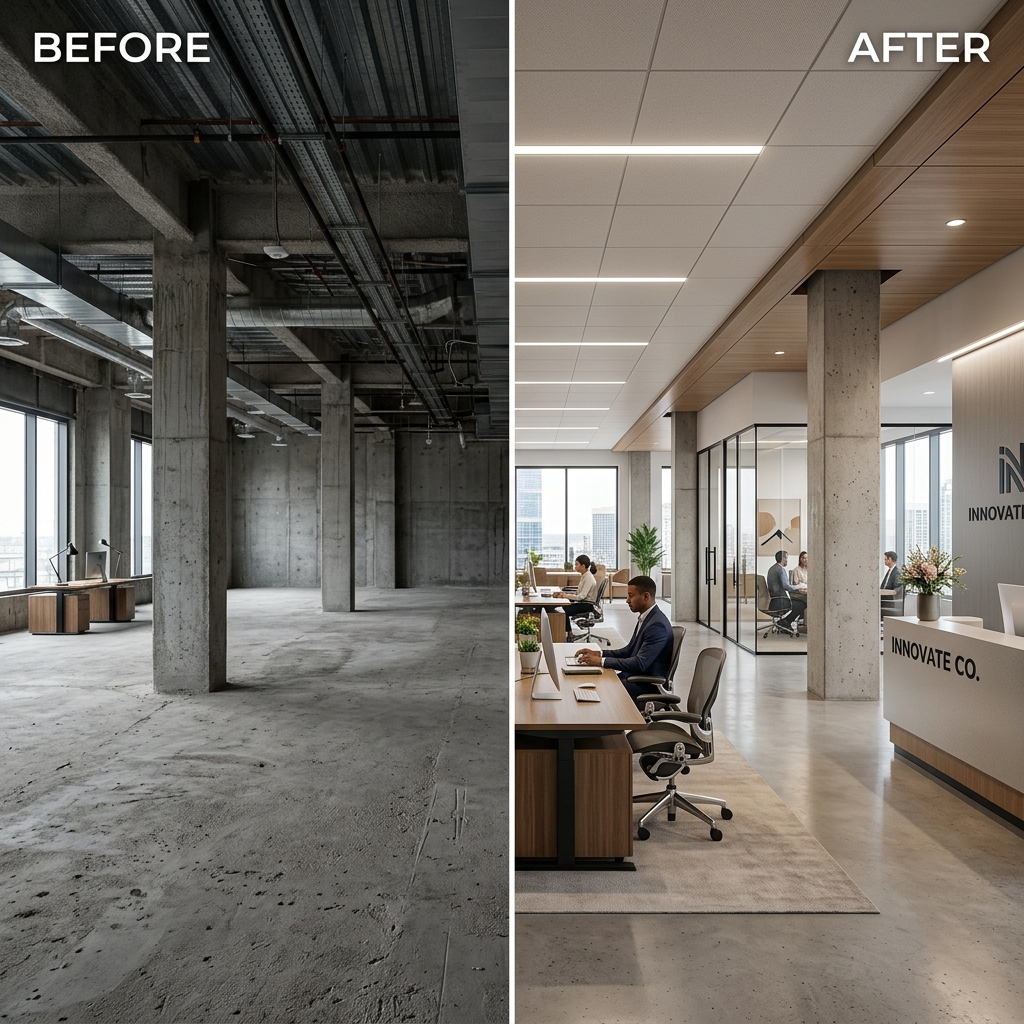
Visualizing the Shell: How Commercial Landlords Use AI Virtual Staging to Pre-Lease Grey-Box Offices
Reduce vacancy by virtually fitting out raw concrete shells into flexible office setups before fit-out builds begin.
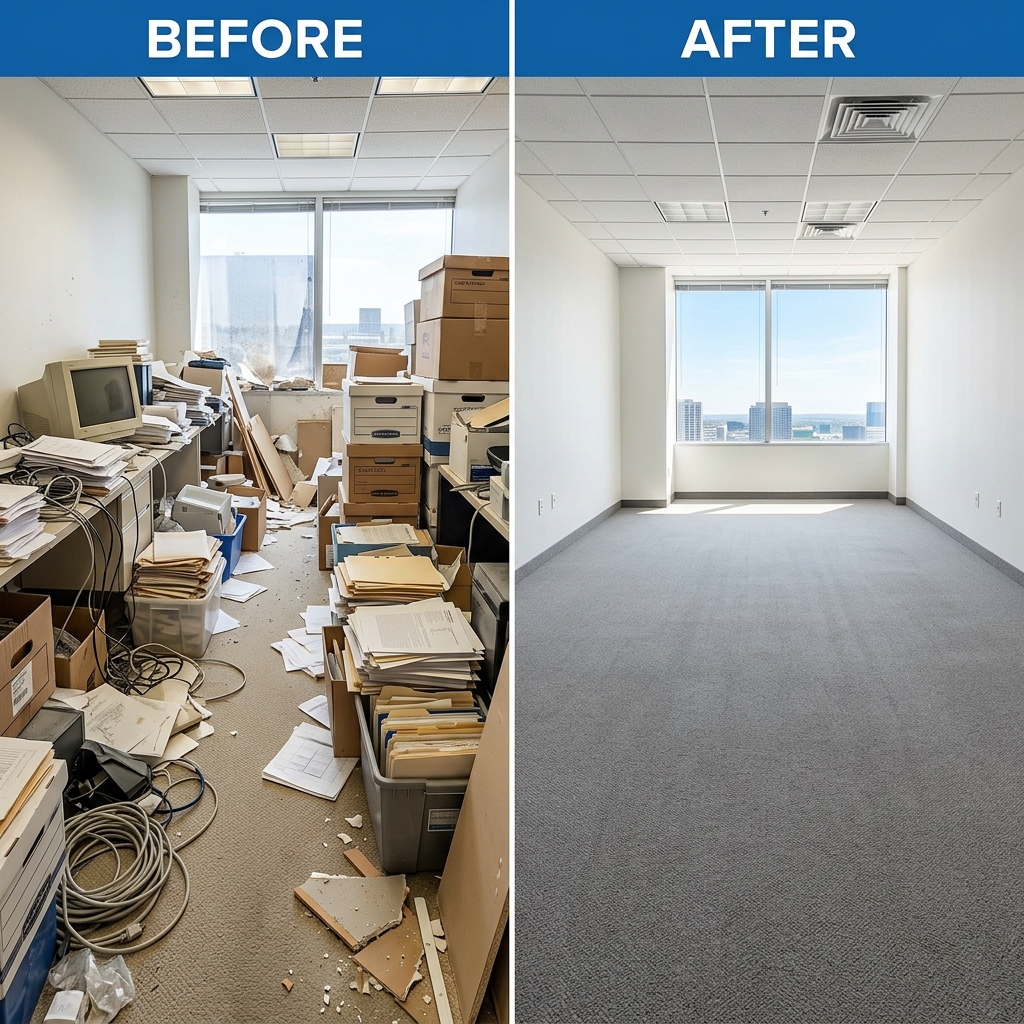
Commercial Decluttering: Using AI to Clear Office Mess and Construction Debris from High-Value Listings
Skip listing delays. Use Estiq's high-fidelity decluttering AI to remove legacy cables, debris, and office junk in seconds.
Ready to transform your real estate listings?
Try Estiq's AI Virtual Staging today and see the difference.
Get Started for Free